 European servers · Based in Amsterdam
AI training for manufacturing
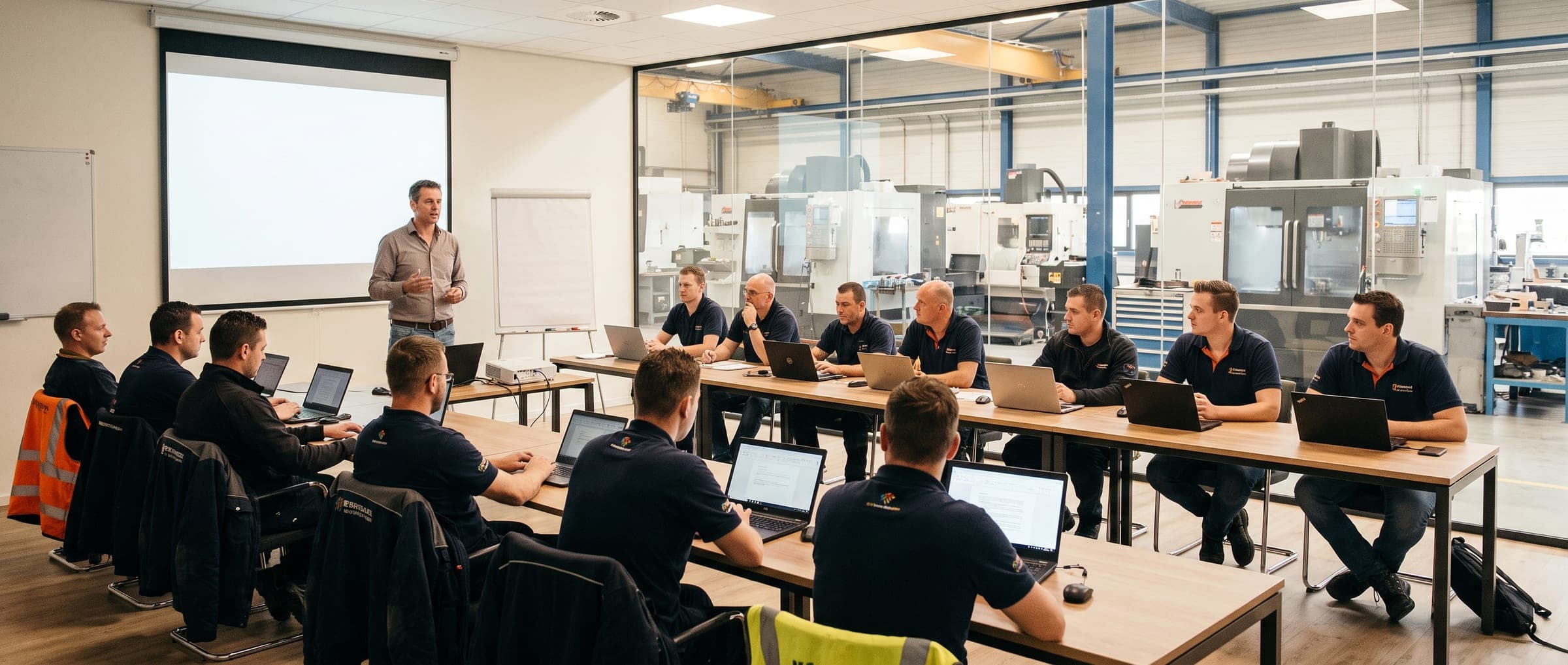
In manufacturing, the gains rarely sit in the machine and usually sit in the paperwork around it: quotes, work preparation, documentation and cost follow-up. That's what we train on.
The AI literacy obligation applies to organisations like






Margins, Skilled labour, Lead times, Documentation.
Orders are getting smaller and more specific, while there are fewer experienced work planners. AI can make your best estimator's knowledge available to the rest of the team, provided that knowledge is recorded somewhere.
- Margins
- Skilled labour
- Lead times
- Documentation
Where AI in manufacturing really saves time.
No generic promises. These are the processes we start with, and what they deliver.
Quote calculation
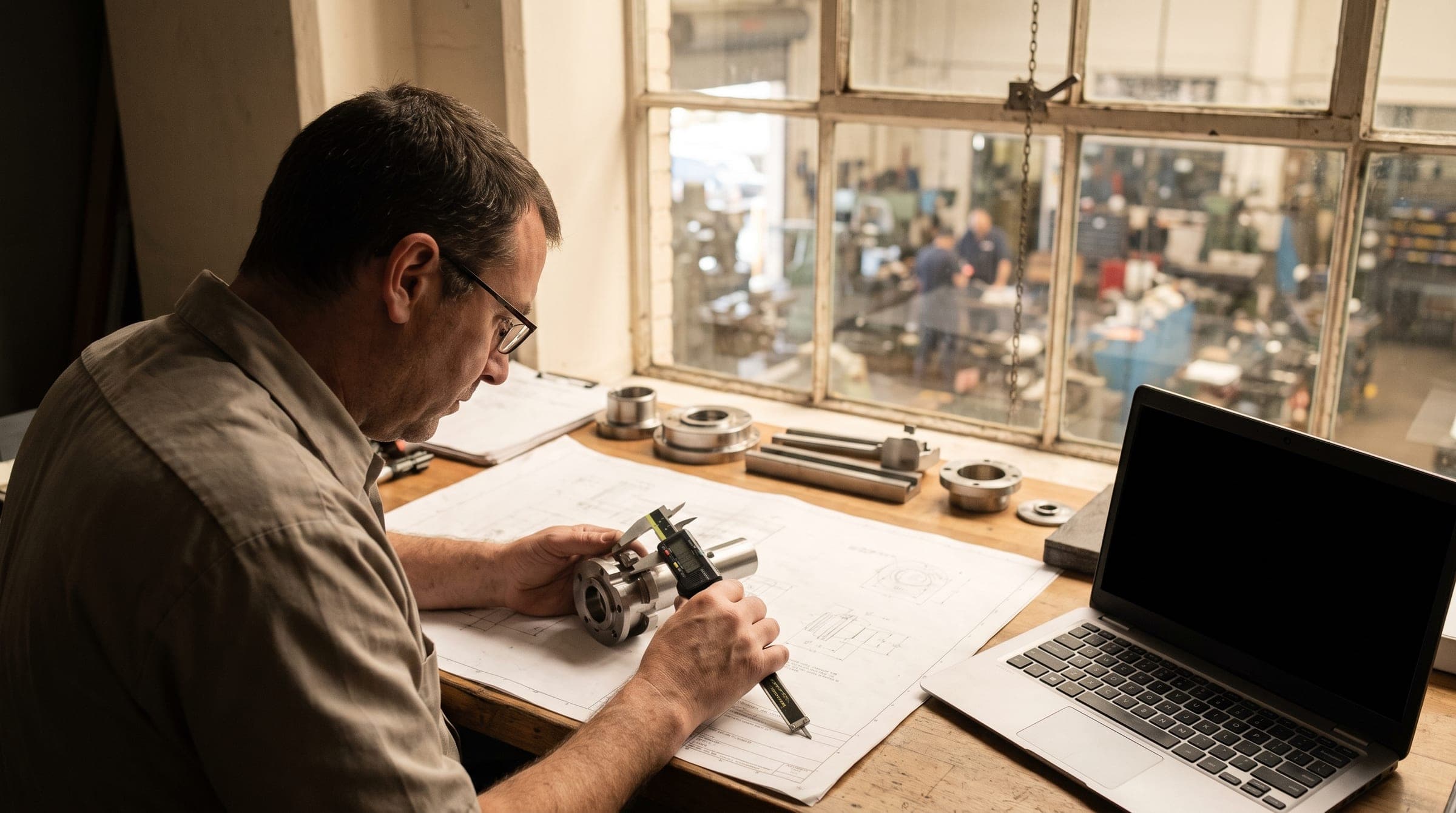
Request and drawing converted into a first calculation based on your own historical orders.
Reading requests
Specifications extracted from customer emails, PDFs and drawings and entered into the ERP, without retyping.
Work instructions
Instructions per operation drawn up from existing documentation, in the operator's own language.
Searching maintenance history
"What did we do last time with this fault?" answered from years of reports and job tickets.
Cost follow-up and margin analysis
Discrepancies between estimate and actual made visible per order, with the likely cause.
Supplier documentation
Certificates, datasheets and declarations made searchable instead of scattered across folders.
Quality reports
Rejects and complaints classified and trended, so structural causes surface.
CE and compliance files
Technical file compiled and checked for missing components.
One organisation, three levels.
The EU AI Act expects the level to match the role. So we don't train everyone the same way: a baseline level for everyone who uses AI, a deeper level for those who apply AI in decision-making or customer contact, and a governance level for those who decide which systems come in.
How this meets the AI literacy obligation →- Management team
- Work preparation and estimating
- Production management and team leaders
- Engineering
- Quality and QHSE
- Inside sales

Metalworking subcontractor
Training focused on work preparation and estimating, using the company's own order history as practice material. Alongside the training, two automations in production: reading requests and proposing a first calculation.
40%
less lead time on quote requests
2
automations live within the programme
What manufacturers pay this from
Almost always from the training budget, stacked with the SLIM scheme (60% of training costs, up to a grant ceiling per application) and, where applicable, a sector L&D fund. For developing your own AI applications, the WBSO R&D tax credit is often usable too.
All budgets and subsidies at a glance →GDPR-proof, within the EU
Everything we build runs on European infrastructure, with data isolation per organisation, audit logs and the right to erasure. Your data is never used to train third-party models, and decisions with consequences always rest with a named human.
How we guarantee that →Three AI agents, ready to use.
Every training comes with three ready-made AI agents, chosen for your sector and set up around the way you work. They're live the moment the training ends, with no implementation project and no extra invoice.
Request Reading Agent
Extracts specifications from customer emails, PDFs and drawings and stages them in your ERP, without retyping.
Calculation Assistant
Proposes a first calculation based on your own historical orders, which the work planner refines.
Maintenance History Agent
Answers "what did we do last time with this fault?" from years of reports and job tickets.
All agents run on European infrastructure, never use your data to train third-party models, and hand every decision that matters to a named person.
Frequently asked questions from manufacturing.
The questions that come up first in this type of organisation: the legal obligation, procurement, privacy and where to start.
Partly. AI can only draw on what's written down somewhere: old orders, calculations, job tickets, drawings, email threads. For most companies that's considerably more than they think. What lives only in your best work planner's head has to be captured first; that's often the most valuable part of the programme, independent of the AI.
Everyone who uses AI tools falls under the Article 4 AI literacy obligation, so yes, but at a basic level and briefly. For the shop floor, a compact session in plain language works better than a classroom training day. The deeper work sits with work preparation, estimating and engineering, where there's most to gain.
With reading customer requests and the first calculation. That's high volume, a lot of retyping, and a direct link to margin and lead time, and it's measurable, so you see within weeks whether it works. Work instructions and maintenance history are logical next steps.
Yes. Everything runs on European infrastructure with data isolation per organisation, and your data is never used to train third-party models. For companies working under export controls or customer-specific confidentiality, we agree at the start, per data type, where it may and may not go.
Further reading
- AI literacy under the EU AI ActWhat the AI literacy obligation actually requires, and what dossier you need to be able to show.
- What does AI training cost?Starting at €495 per person, and what determines the final price.
- Spending your innovation budgetWhich pots you can pay from, and which subsidies you can stack on top.
Two ways in.
Answer a few questions and get a number now, or skip straight to a person. Both end up in the same place.

50+ organisations helped · 3,000+ people trained
We love AI, but it's nice to talk to a human.
No bot, no ticket queue. A person reads this and answers within one working day, usually with a free 30-minute assessment of where AI would actually save you time and money.